

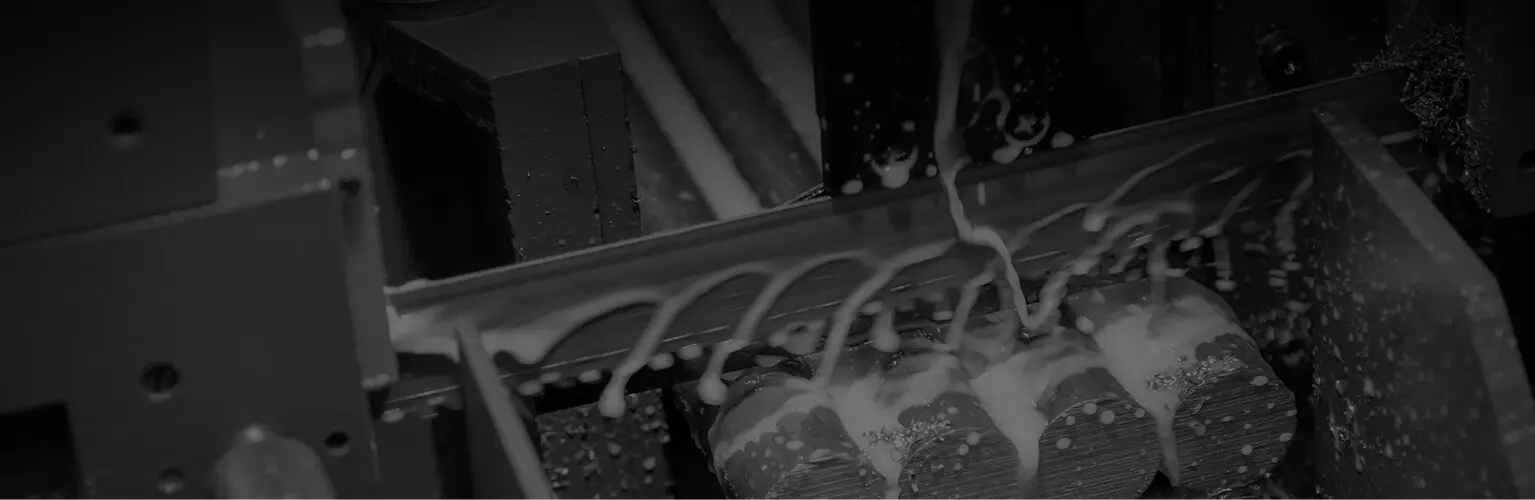
Automatic Band Saw Machines: Types, Advantages & Applications
In industrial metal cutting, accuracy and consistency matter just as much as speed. While basic cutting tools may be sufficient for small or manual tasks, production environments require machines that can cut materials repeatedly, reliably, and with minimal operator involvement.
Automatic band saw machines are designed to meet these needs by automating the cutting process – from material feeding to clamping and cutting. In this article, we'll explain what an automatic band saw machine is, how it works, the main types of control systems, and why it is widely used in modern metalworking operations.
What Is an Automatic Band Saw Machine?
 A band saw machine is a cutting machine that uses a continuous loop blade running around two wheels to cut material. The blade moves in one direction and removes material through a steady, controlled cutting action, making band saws well-suited for straight, accurate cuts in metal, wood, and other materials.
An automatic band saw machine builds on this basic principle by automating the entire cutting cycle. Tasks such as material feeding, positioning, clamping, cutting, and blade return are performed automatically, reducing manual labor and improving cutting consistency. This makes automatic band saws especially suitable for high-volume and repetitive cutting applications.
How the Band Saw Blade Works
During cutting, only a short section of the blade – called the cutting zone – contacts the workpiece. In most bandsaw designs, this cutting section is oriented perpendicular to the work surface to ensure straight, accurate cuts.
Once the blade completes the cut and exits the material, it continues traveling around the wheels and transitions back to its natural loop angle as it returns to the non-cutting path. This continuous motion helps distribute blade stress evenly, reducing fatigue and extending blade life.
Types of Operating Systems for Automatic Band Saw Machines
Automatic band saw machines typically use one of two operating systems: a length counter with keyboard control system or a numerical control (NC) system. Both systems automate the feeding and cutting cycle, but they differ in how cutting parameters are set and how flexible they are for different production needs.
The length counter with keyboard control system is generally used for repetitive cutting tasks where the same length is produced in large quantities. In contrast, NC systems provide greater programming flexibility, allowing operators to prepare multiple cutting lengths and quantities within a single production run.
Length Counter with Keyboard Control System
The length counter with keyboard control system is designed for repetitive automatic cutting of a single length.
In this system, the operator sets the required cutting length using the length counter and enters the quantity through keyboard before starting the cutting cycle. The machine then feeds the material to the preset length and performs the cut automatically. This process repeats until the required quantity is completed.
Because only one cutting length can be programmed at a time, this system is best suited for high-volume production where the same cut length is repeated many times. Its simple setup and reliable operation make it an efficient solution for straightforward cutting tasks.
NC Automatic System
The NC automatic system uses numerical control to manage feeding positions and cutting sequences.
In this system, operators can program multiple cutting lengths and quantities within a single production run. Up to nine cutting lengths can be set, allowing the machine to automatically process different cutting requirements without stopping to reset parameters.
NC systems can also store frequently used cutting parameters in the system database for quick retrieval, helping reduce setup time. In addition, the system can automatically detect errors and apply length correction compensation to maintain cutting accuracy during production.
With a touch panel interface, operators can easily input parameters and monitor machine information during operation. These capabilities make NC systems ideal for manufacturers handling diverse workpiece sizes, mixed orders, or production environments where cutting requirements change frequently.
How Do Automatic Band Saw Machines Work?
Automatic Feeding
The automatic feeding system uses either servo motors or hydraulic mechanisms to push the material forward by a preset cutting length. For example, when cutting a long, cylindrical metal bar into multiple pieces, the feeder pushes the material forward to the programmed position for each cut. After one cut is completed, the system automatically feeds the material once again by the preset distance for the next cycle.
Hydraulic clamping
During cutting, the material is securely held in place by hydraulic clamps, which is essential to maintain stability and accuracy, especially when cutting metal stock. By firmly securing the workpiece, hydraulic clamping minimizes vibration and prevents uneven or zigzag cuts, ensuring consistent cutting quality.
Cutting with Blade
Initially, the entire saw frame is raised up high to make room for the material to be pushed to the programmed cutting position. Once feeding is done, the saw frame is then lowered until the blade cuts through the workpiece. The continuous blade is guided by carbide blade guides, which ensure the blade remains stable and straight while cutting. As the blade cuts through the material, the downward movement of the saw frame is controlled by either a hydraulic system or a servo motor, providing smooth cutting action and consistent results. After the cut is completed, the saw frame rises again to prepare for the next feeding and cutting cycle.
Key Advantages of Automatic Band Saw Machines
Increased Productivity
Automatic band saw machines are designed for continuous feeding and cutting, allowing multiple cuts to be performed in sequence without stopping for manual repositioning. Once the cutting parameters are set, the machine automatically repeats the cycle, making it ideal for high-volume production and batch cutting applications.
High Cutting Accuracy and Consistency
Automatic band saw machines achieve consistent cutting accuracy through precise feed control and programmable cutting parameters. Length counters, encoders, or servo motors ensure that material is advanced to the correct position before each cut, helping maintain uniform dimensions across all workpieces. This level of control allows manufacturers to achieve repeatable results even in long production runs.
Reduced Labor Requirements
With automated feeding, clamping, and cutting, automatic band saw machines greatly reduce the need for constant operator involvement. One operator can oversee the machine rather than manually handling each cutting step. This not only lowers labor costs but also reduces human fatigue and the risk of human error, improving both productivity and workplace safety.
Lower Material Waste
Precise feeding and controlled cutting cycles help automatic band saw machines make more efficient use of raw material. By eliminating manual adjustments and cumulative positioning errors, these machines reduce overcutting and unnecessary scrap. This is especially beneficial in high-volume cutting, where small inaccuracies can quickly add up to significant material loss.
Easier Maintenance and System Monitoring
Many modern automatic band saw machines are equipped with self-diagnostic functions and maintenance reminders. These features help operators monitor machine condition, identify potential issues early, and perform maintenance at the right time. As a result, downtime is reduced, and machine reliability is improved—an important advantage for production-oriented operations.
Applications of Automatic Band Saw Machines
Automatic band saw machines are widely used across industries that require accurate, efficient cutting of metal materials before further processing or assembly.
Steel Processing Centers
Automatic band saw machines are commonly used in steel processing centers for the high-volume cutting of steel bars and tubes to specific lengths. These cut materials are supplied as standardized stock for downstream applications, such as machine frames, handrails, and structural components.
Metal Processing Centers
Metal processing centers handle a wide range of metals, including carbon steel, aluminum, copper and brass. Automatic band saw machines cut these materials into precise lengths for subsequent welding, machining or finishing.
Automotive and Machinery Manufacturer
In a vehicle, hundreds of items are cut by automatic band saw machines, from steel bars and tubes that form the basis of seat frames, seat rails on which you adjust the chair, base frame components, to various structural parts. These precisely cut blanks are later jointed or machined into assemblies that support seating system, underbody structures, and mounting components, where dimensional consistency is critical for safety and downstream assembly efficiency.
Construction Material Suppliers
Construction material suppliers use automatic band saw machines to cut steel beams, pipes, and structural material into standardized or project-specific lengths. These materials are often large, heavy and produced in batches, making manual cutting inefficient and inconsistent. Heavy-duty automatic band saw machines provide the cutting capacity, stability, and repeatability required to support prefabrication and build supply for construction projects, ensuring reliable fits and reducing on-site cutting.
Conclusion
Automatic band saw machines play an essential role in modern metal cutting by improving efficiency, reducing manual handling, and maintaining stable cutting accuracy in continuous production. To meet different material sizes, cutting capacities, and automation requirements, MEGA Machine offers a comprehensive range of automatic band saw machines, covering various configurations and specifications for ferrous and non-ferrous metal cutting applications.
Within this lineup, the H-400S Automatic Servo Feedrate Double Column Horizontal Band Saw serves as a representative example of MEGA's latest automatic design. It features servo-controlled automatic feeding for smooth, continuous material advance, a dual-direction hydraulic clamping system to reduce friction between the workpiece and fixed side, servo-driven saw frame movement to save labor and time, and hydraulic blade tension control to maintain cutting accuracy. Combined with its rigid double-column structure, the H-400S delivers stable and reliable performance for heavy-duty metal cutting.
Contact us today to explore MEGA Machine's full range of automatic band saw solutions and find the model best suited to your production needs.