

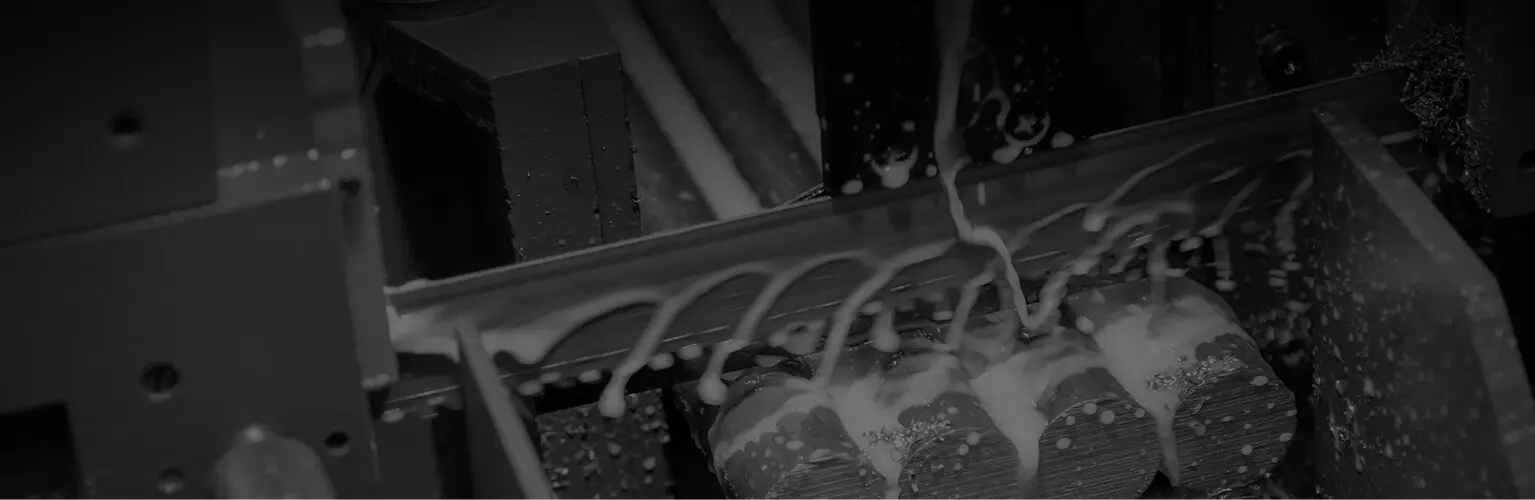
What Is Thread Rolling? Types of Thread Rolling Machines
From tiny machine screws to long threaded rods for hanging ceilings, threaded fasteners are essential in our life. They hold machines together, secure building structures, and allow parts to be assembled and disassembled with precision. These fasteners come in a variety of lengths, thread shapes, and diameters—each designed for a specific purpose.
So how are these threads created so accurately and efficiently? One of the most widely used methods is thread rolling, a process that forms threads by shaping metal rather than cutting it. It gives the thread polished surface, which keeps it less worn out and make sure it is smoothly tightened.
What is Thread Rolling?
Thread rolling is a cold-forming manufacturing process that creates threads by applying pressure to a smooth metal workpiece between hardened rolling dies. Instead of removing material, the dies press hard to plastically deform the metal. The force is high enough to change the internal structure of the workpiece, and it flows into the shape of the thread profile.
Thread rolling is a non-subtractive approach which is proved to be efficient for the following reasons: First of all, no chips and material waste were made; secondly, it produced stronger threads with better grain flow; last but not least, the surface finish is smooth and it presents yield consistency.
Types of Thread Rolling Feeding Mechanisms
Thread rolling machines use different feeding modes depending on the workpiece size, thread length, and production requirements. The two most common methods are infeed and thru-feed thread rolling. Each method forms threads in a different way and is suited to specific types of parts and applications.
Infeed Thread Rolling
In infeed thread rolling, the workpiece is positioned between the rolling dies and remains stationary during the rolling process. The dies move inward radially to form the thread at a fixed position, without any axial movement along the length. Because the thread is formed in a single position, the length of thread is limited to the length of the dies. Therefore, infeed rolling is a simple method, well-suited for compact threaded fasteners. It is typically used for: short screws, bots with a defined threaded length and parts where the thread does not extend along the entire shaft.
Thru-Feed Thread Rolling
In thru-feed thread rolling, the workpiece is continuously fed through the rolling dies and moves along its length, or we can say moves axially, while rotating. As the workpiece advances, the dies progressively form the thread along its surface.
Because the thread is generated continuously during axial movement, the length of the thread is not limited by the width of the dies, allowing threads to be formed over long distances in a single pass. As a result, thru-feed rolling is ideal for producing long, fully threaded parts. This method is commonly used for threaded rods, long studs, and other elongated workpieces, and it offers high efficiency and consistent thread quality, making it well suited for high-volume mass production.
Types of Thread Rolling Machines
While feeding mechanisms describe how a thread is formed, thread rolling machines are classified by die structure and pressure application. The most common categories include cylindrical die, flat die, and planetary thread rolling machines, each suited to different geometrics and production requirements.
Cylindrical Die Thread Rolling Machines
Cylindrical die thread rolling machines use round rolling dies to form threads and are among the most widely used thread rolling systems. Based on the number of rolling dies involved, they can be commonly divided into two-die and three-die machines.
Two-Dies Rolling Machines
 Two-dies rolling machines use two opposing cylindrical dies to form threads by rotation and pressure. The workpiece is placed between two parallel or slightly angled dies. One die remains fixed, while the other moves inward to engage the workpiece and retracts after the rolling process is complete. As the dies rotate, the thread profile engraved on the die surfaces plastically deforms the metal, gradually forming a complete thread.
Depending on setup, two-die machines can operate in either infeed rolling or thru-feed mode, making them suitable for both short fastener and long threaded parts.
Find more information about two-dies rolling machines here.
Three-Dies Rolling Machines
Three-dies rolling machines use three cylindrical dies evenly arranged around the workpiece. During operation, all three dies rotate and advance simultaneously, applying pressure from three directions while the workpiece rotates in place.Because the rolling force is evenly distributed, three-die machines are particularly suitable for thin-walled tubes or hollow parts, as the balanced pressure helps reduce deformation and improves overall dimensional stability. Get to know MEGA's three-dies rolling machines.
Flat Die Thread Rolling Machines
Flat die thread rolling machines use two flat dies positioned parallel to each other—one stationary and one moving in a linear reciprocal motion. The workpiece is placed between the dies, and as the moving die slides, the workpiece rolls between the die surfaces and the thread is formed.This design is especially suitable for rolling small screws and fasteners, where precision and consistency are critical, such as micro ball screws or screws used in mobile phones. See our flat die thread rolling machines here.
Planetary Thread Rolling Machines
Planetary thread rolling machines are designed for high-speed, multi-point thread forming. Their structure typically consists of a central rotating cylindrical die and crescent-shaped outer dies arranged around it. The central die, which is machined with a matching thread profile, drives the workpiece to rotate and keeps it properly aligned during operation. Surrounding planetary dies apply continuous circumferential pressure, plastically deforming the material to form thread. Because the forming process is extremely fast and continuous, planetary thread rolling machines are well suited for high-volume production of short threaded fasteners.
Planetary thread rolling machines are best suited for mass production of small-diameter, short-length headed screws, where extremely high productivity and consistent thread quality are required.
Conclusion
Thread rolling is a highly efficient and reliable method for producing threaded fasteners, offering superior strength, surface finish, and material efficiency compared to cutting processes. By understanding all feeding mechanisms and machine types, manufacturers can select the most appropriate solution for their specific workpieces and production goals. Whether producing short screws, long threaded rods, or high-volume fasteners, MEGA supports these needs with two-die, three-die and flat-die thread rolling machines that accommodate infeed, thru-feed and special rolling modes according to application requirements. Contact us today to find the right machine types for your production requirements.